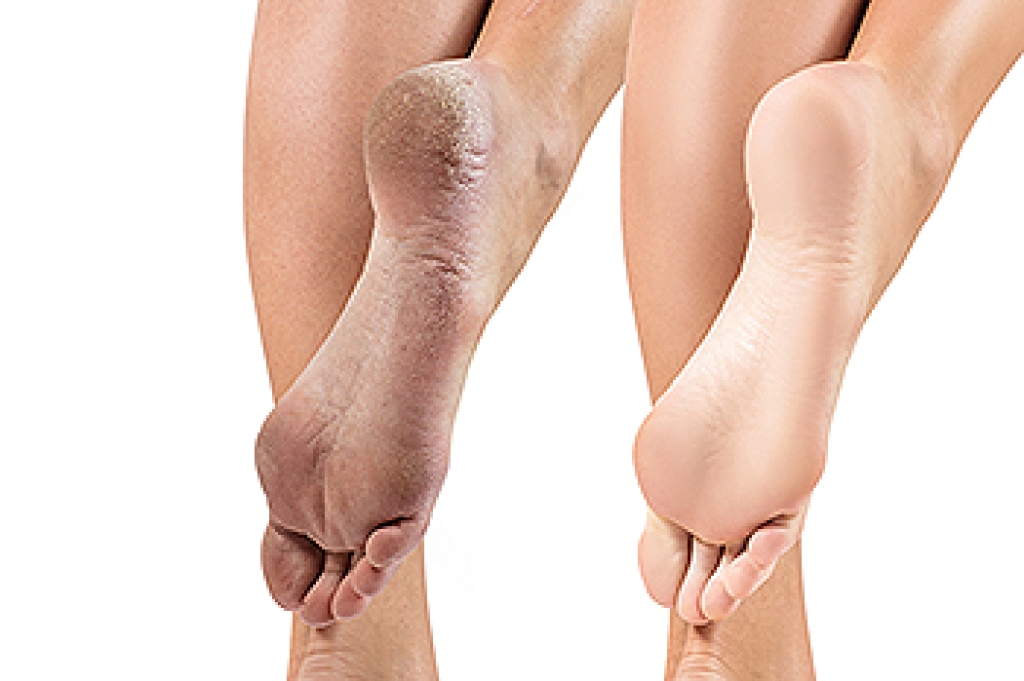
Cracked heels develop when the skin on the bottom of the feet becomes dry, thick, and less flexible, leading to painful splitting under pressure. Several conditions play a role in this problem. Skin disorders like psoriasis and eczema can cause rapid skin buildup or irritation, making the heels more likely to crack.
Diabetes and poor circulation can reduce moisture and slow healing, increasing the risk of fissures, which are deeper cracks in the skin. Excess body weight places added stress on the heels, causing the skin to expand and break. The skin loses natural oils and protective cushioning as it ages. Low levels of important vitamins and minerals can weaken the skin’s outer layer. A podiatrist can identify the cause and evaluate circulation and skin health. Treatment can then focus on reducing pressure, removing thickened skin safely, and supporting healing. If you have painful cracked heels, it is suggested that you make an appointment with a podiatrist for treatment.
If the skin on your feet starts to crack, you may want to see a podiatrist to find treatment. If you have any concerns, contact Dr. Robbi Young from Grand Haven Foot & Ankle. Our doctor can provide the care you need to keep you pain-free and on your feet.
Cracked Heels
It is important to moisturize your cracked heels in order to prevent pain, bleeding, and infection. The reason cracked heels form is because the skin on the foot is too dry to support the immense pressure placed on them. When the foot expands, the dry skin on the foot begins to split.
Ways to Help Heal Them
- Invest in a good foot cream
- Try Using Petroleum Jelly
- Ease up on Soaps
- Drink Plenty of Water
Ways to Prevent Cracked Heels
- Moisturize After Showering
- Skip a Shower
- Keep Shower Water Lukewarm
- Don’t Scrub Your Feet
If you are unsure how to proceed in treating cracked heels, seek guidance from a podiatrist. Your doctor will help you with any questions or information you may need.
If you have any questions, please feel free to contact our office located in Grand Haven, MI . We offer the newest diagnostic and treatment technologies for all your foot care needs.