(616) 846-3400
Fax: (616) 846-3406


Review Us
Follow Us
Like Us

Blog

Factors That Lead to Ingrown Toenails

Ingrown toenails develop when several risk factors come together over time. Improper trimming is a common cause, especially when nails are cut too short or rounded at the corners. Wearing tight shoes or with narrow toe boxes place repeated pressure on the nail edges and surrounding skin. Repetitive activities such as running or long periods of standing can worsen this pressure. Toe injuries, even minor ones, may change how the nail grows. Some people have naturally curved or thick nails that are more likely to press into the skin. Excessive sweating softens the skin, making it easier for the nail to break through. Poor foot hygiene and limited vision or flexibility can also contribute by making nail care difficult. Early awareness matters because inflammation and infection can develop quickly. If toenail pain, redness, or swelling appears, it is suggested that you see a podiatrist for an evaluation and appropriate treatment.

Ingrown toenails may initially present themselves as a minor discomfort, but they may progress into an infection in the skin without proper treatment. For more information about ingrown toenails, contact Dr. Robbi Young of Grand Haven Foot & Ankle. Our doctor can provide the care you need to keep you pain-free and on your feet.

Ingrown Toenails

Ingrown toenails are caused when the corner or side of a toenail grows into the soft flesh surrounding it. They often result in redness, swelling, pain, and in some cases, infection. This condition typically affects the big toe and may recur if it is not treated properly.

Causes

  • Improper toenail trimming
  • Genetics
  • Improper shoe fitting
  • Injury from pedicures or nail picking
  • Abnormal gait
  • Poor hygiene

You are more likely to develop an ingrown toenail if you are obese, have diabetes, arthritis, or have any fungal infection in your nails. Additionally, people who have foot or toe deformities are at a higher risk of developing an ingrown toenail.

Symptoms

Some symptoms of ingrown toenails are redness, swelling, and pain. In rare cases, there may be a yellowish drainage coming from the nail.

Treatment

Ignoring an ingrown toenail can have serious complications. Infections of the nail border can progress to a deeper soft-tissue infection, which can then turn into a bone infection. You should always speak with your podiatrist if you suspect you have an ingrown toenail, especially if you have diabetes or poor circulation.

If you have any questions, please feel free to contact our office located in Grand Haven, MI . We offer the newest diagnostic and treatment technologies for all your foot care needs.

Read more about Ingrown Toenail Care

Understanding the Structure of the Foot

The foot is a complex structure made up of bones, joints, muscles, tendons, and ligaments that work together to support the body. This intricate design allows the foot to be strong enough for weight-bearing while remaining flexible for walking, running, and balance. The joints of the foot provide movement and shock absorption, while tendons and ligaments stabilize the foot and guide motion. Muscles help control posture and adapt to different surfaces during daily activities. Maintaining a balance between strength and flexibility is essential for proper foot function and injury prevention. When this balance is disrupted, pain, fatigue and instability may occur. A podiatrist can help by evaluating foot structure alignment and movement patterns. Care may include treatment for pain, injuries, or deformities, as well as recommendations for supportive footwear or custom orthotics. If you have foot pain, it is suggested that you consult a podiatrist who can accurately diagnose and treat various foot and ankle conditions.

If you have any concerns about your feet, contact Dr. Robbi Young from Grand Haven Foot & Ankle. Our doctor can provide the care you need to keep you pain-free and on your feet.

Biomechanics in Podiatry

Podiatric biomechanics is a particular sector of specialty podiatry with licensed practitioners who are trained to diagnose and treat conditions affecting the foot, ankle and lower leg. Biomechanics deals with the forces that act against the body, causing an interference with the biological structures. It focuses on the movement of the ankle, the foot and the forces that interact with them.

A History of Biomechanics

  • Biomechanics dates back to the BC era in Egypt where evidence of professional foot care has been recorded.
  • In 1974, biomechanics gained a higher profile from the studies of Merton Root, who claimed that by changing or controlling the forces between the ankle and the foot, corrections or conditions could be implemented to gain strength and coordination in the area.

Modern technological improvements are based on past theories and therapeutic processes that provide a better understanding of podiatric concepts for biomechanics. Computers can provide accurate information about the forces and patterns of the feet and lower legs.

Understanding biomechanics of the feet can help improve and eliminate pain, stopping further stress to the foot.

If you have any questions please feel free to contact our office located in Grand Haven, MI . We offer the newest diagnostic and treatment technologies for all your foot and ankle needs.

Read more about The Importance of Biomechanics in Podiatry

Causes and Risk Factors of Plantar Fasciitis

Plantar fasciitis is a common foot condition caused by inflammation of the plantar fascia, a thick band of tissue that runs along the bottom of the foot connecting the heel to the toes. It often results in sharp or aching heel pain, particularly with the first steps in the morning or after periods of rest. Causes include repetitive strain from running, prolonged standing, high-impact activities, or tight calf muscles. Risk factors include obesity, flat feet, high arches, and wearing improper footwear. If left untreated, plantar fasciitis can limit mobility and affect daily activities. A podiatrist can provide an accurate diagnosis, recommend targeted stretches, supportive footwear, orthotics, and treatment strategies to reduce inflammation and promote healing. If you have heel pain, it is suggested that you consult a podiatrist who can accurately diagnose and treat plantar fasciitis.

Plantar fasciitis can be very painful and inconvenient. If you are experiencing heel pain or symptoms of plantar fasciitis, contact Dr. Robbi Young  from Grand Haven Foot & Ankle. Our doctor can provide the care you need to keep you pain-free and on your feet.

What Is Plantar Fasciitis?

Plantar fasciitis is the inflammation of the thick band of tissue that runs along the bottom of your foot, known as the plantar fascia, and causes mild to severe heel pain.

What Causes Plantar Fasciitis?

  • Excessive running
  • Non-supportive shoes
  • Overpronation
  • Repeated stretching and tearing of the plantar fascia

How Can It Be Treated?

  • Conservative measures – anti-inflammatories, ice packs, stretching exercises, physical therapy, orthotic devices
  • Shockwave therapy – sound waves are sent to the affected area to facilitate healing and are usually used for chronic cases of plantar fasciitis
  • Surgery – usually only used as a last resort when all else fails. The plantar fascia can be surgically detached from the heel

While very treatable, plantar fasciitis is definitely not something that should be ignored. Especially in severe cases, speaking to your doctor right away is highly recommended to avoid complications and severe heel pain. Your podiatrist can work with you to provide the appropriate treatment options tailored to your condition.

If you have any questions, please feel free to contact our office located in Grand Haven, MI . We offer the newest diagnostic and treatment technologies for all your foot care needs.

Read more about Plantar Fasciitis

Why Wearing High Heels Can Harm the Feet

High heels place the feet in a steep incline that shifts weight toward the toes. This posture forces the ball of the foot to carry more pressure than it should. The result is a change in balance that can strain muscles, ligaments, and joints, and can even cause small tears from repeated stress. When the heel is raised, the arch and heel are pulled upward, which keeps the Achilles tendon in a shortened position and can cause discomfort in that area. A narrow toe box coupled with a pointed design squeezes the toes together, which can lead to bunions or irritation across the joints. The altered position of the feet while wearing high heels affects posture and can increase fatigue in the ankles as they work harder to stay stable. A podiatrist can assess foot structure, advise on safer footwear choices, and provide treatment when pain persists. If you have foot pain related to wearing high heels, it is suggested that you schedule an appointment with a podiatrist for a diagnosis and safe treatment.

High heels have a history of causing foot and ankle problems. If you have any concerns about your feet or ankles, contact Dr. Robbi Young from Grand Haven Foot & Ankle. Our doctor can provide the care you need to keep you pain-free and on your feet.

Effects of High Heels on the Feet

High heels are popular shoes among women because of their many styles and societal appeal.  Despite this, high heels can still cause many health problems if worn too frequently.

Which Parts of My Body Will Be Affected by High Heels?

  • Ankle Joints
  • Achilles Tendon – May shorten and stiffen with prolonged wear
  • Balls of the Feet
  • Knees – Heels cause the knees to bend constantly, creating stress on them
  • Back – They decrease the spine’s ability to absorb shock, which may lead to back pain.  The vertebrae of the lower back may compress.

What Kinds of Foot Problems Can Develop from Wearing High Heels?

  • Corns
  • Calluses
  • Hammertoe
  • Bunions
  • Morton’s Neuroma
  • Plantar Fasciitis

How Can I Still Wear High Heels and Maintain Foot Health?

If you want to wear high heeled shoes, make sure that you are not wearing them every day, as this will help prevent long term physical problems.  Try wearing thicker heels as opposed to stilettos to distribute weight more evenly across the feet.  Always make sure you are wearing the proper shoes for the right occasion, such as sneakers for exercising.  If you walk to work, try carrying your heels with you and changing into them once you arrive at work.  Adding inserts to your heels can help cushion your feet and absorb shock. Full foot inserts or metatarsal pads are available. 

If you have any questions, please feel free to contact our office located in Grand Haven, MI . We offer the newest diagnostic and treatment technologies for all your foot care needs.
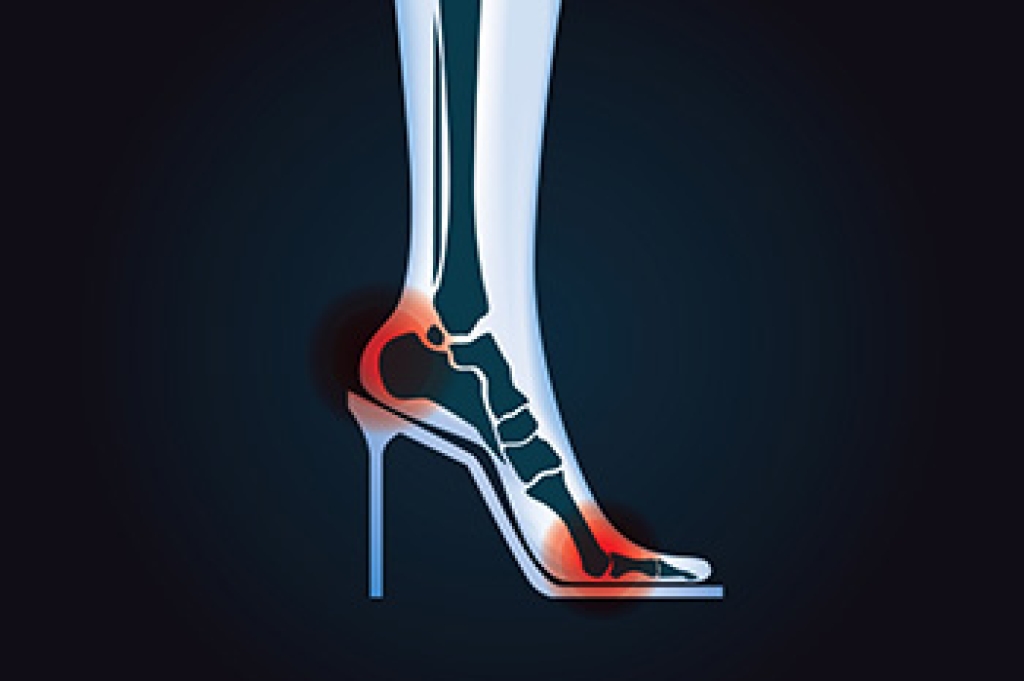
Read more about Why High Heels Are Not Ideal for Healthy Feet
Connect with us